Your inbox holds forty unread messages and half of them are LinkedIn telling you someone viewed your profile, someone posted an update, someone marked a work anniversary. You clicked the unsubscribe link on one last week, and three more arrived the next morning from a different category. LinkedIn emails are notifications, and the switch that turns them off sits in your LinkedIn settings, not inside any single message.
To stop LinkedIn emails, change LinkedIn’s own settings rather than unsubscribing message by message. Open Settings and Privacy, then Communications, then Email, and set the frequency of all email notifications to No email. LinkedIn still sends security alerts, password resets, and billing receipts, which you cannot turn off.
Why does LinkedIn send so many emails?
LinkedIn mirrors almost every in-app event as an email by default. Someone views your profile, a connection posts, a job matches your history, a group you joined has an update, and each of those triggers a separate notification that also lands in your inbox. You never chose each one individually. You opted into the whole stream the moment you created the account, and LinkedIn left most categories switched on.
That makes LinkedIn mail a textbook case of graymail: messages you technically agreed to that you never quite decided to keep. It is not spam, so marking it as junk is the wrong tool, and it teaches your provider to filter mail you might actually want, like a login alert. The right move is to stop the notifications at the source, where LinkedIn generates them.
How do I stop LinkedIn emails at the source?
Open your LinkedIn email preferences and switch the categories off. LinkedIn groups its email controls in one panel, so you can turn the whole stream down without opening a single message. As of 2026 the path on desktop looks like this, though LinkedIn moves these labels around often:
- Open Settings and Privacy. Click the Me icon at the top of the LinkedIn homepage, then select Settings and Privacy.
- Go to Communications, then Email. In the left rail, select Communications, then choose Email. LinkedIn also surfaces the same toggles under the Notifications section, so use whichever your account shows.
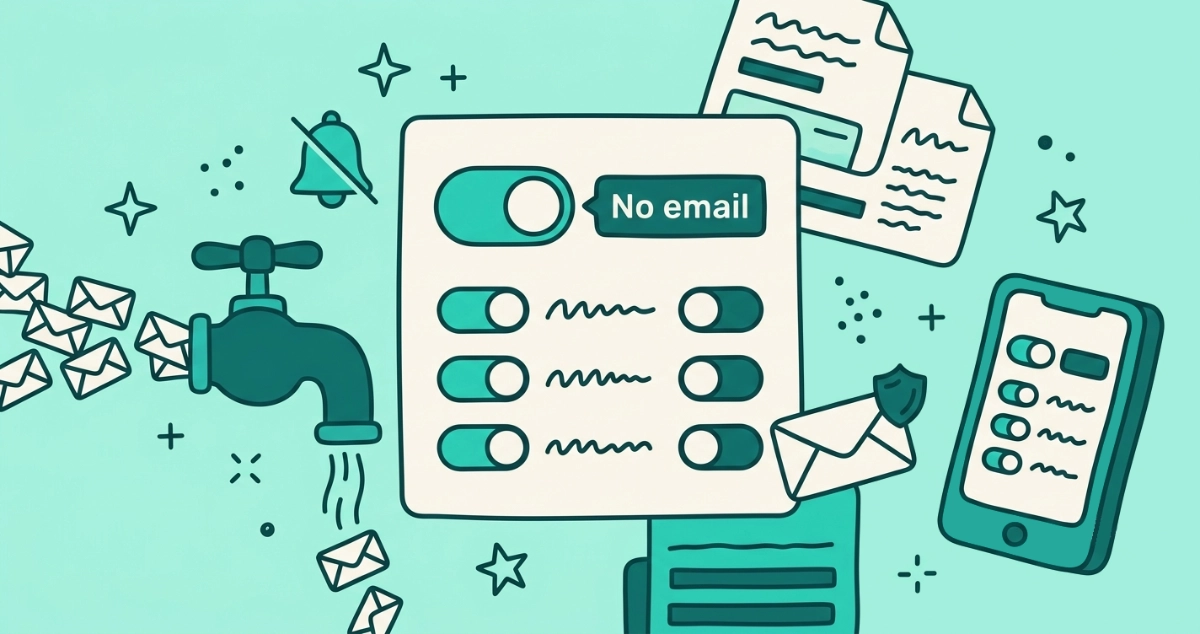
- Set the master frequency to No email. At the top of the email preferences page, look for the control to change the frequency of all email notifications and set it to No email. That one switch flips every optional category off together.
- Or turn off categories one by one. Open any category, such as Invitations or Jobs, and switch its email off while leaving others on if you still want a few.
Expected outcome: LinkedIn stops queuing optional emails and your inbox goes quiet within a day or two. If you would rather jump straight there, LinkedIn’s guide to managing emails documents the same panel, and the direct address linkedin.com/mypreferences/d/categories/email opens the email preferences page for you when you are signed in.
Which LinkedIn email categories can you turn off?
LinkedIn splits email into around ten categories, each with its own switch and its own frequency. Turning them off one at a time gives you a scalpel instead of the master toggle’s blunt cut. As of 2026 the categories on the email preferences page are:
- Conversations: messages and InMail replies
- Invitations: connection requests and invitation reminders
- Jobs and Opportunities: job alerts and recruiter mail
- Network Activity: posts, reactions, and comments from your network
- News and Articles: the daily digest and trending stories
- Profile and Account: profile views and account nudges
- Recommendations and Endorsements: skill endorsements and recommendation requests
- Groups: group digests and discussion updates
- Events: event reminders and invitations
- Tips and Offers from LinkedIn: product prompts and Premium marketing
Profile views, network activity, and tips and offers are the usual culprits behind a flooded inbox. Turn those three off first and the volume drops sharply, even if you leave direct messages on.
How do I turn off LinkedIn emails on the phone app?
The mobile app hides the same controls two taps deeper. The path mirrors the desktop one:
- Tap your profile photo in the top-left corner of the app.
- Tap Settings.
- Open Communications or Notifications, then choose Email.
- Switch off the categories you do not want, or set the overall frequency to No email.
Expected outcome: the change syncs to your account, so turning email off in the app also silences it on desktop and the web. One caution worth naming: the app also controls push notifications in the same area, so read each toggle’s label before you flip it. Turning off a push alert is separate from turning off its email.
What is the fastest way to stop one annoying type of LinkedIn email?
Click the Unsubscribe link in the footer of the offending email. On a LinkedIn notification, that link behaves differently from a normal newsletter opt-out. Instead of removing you from one giant list, it deep-links straight to the settings page for that exact category, so a single click drops you on the toggle for profile views, job alerts, or whatever triggered the message. You skip the whole settings menu.
You can even do this without opening the message. Many mail apps read the unsubscribe header LinkedIn attaches and show their own unsubscribe control at the top of the email, which our guide on unsubscribing without opening an email walks through. Either way, the click lands you at the source setting, which is the durable fix. Deleting the email only clears today’s copy; the next one is already queued behind it.
Which LinkedIn emails can you never turn off?
Security and transactional emails ignore your preferences by design. Password resets, two-factor authentication codes, payment and billing confirmations, terms-of-service updates, and security warnings arrive no matter how many toggles you flip, because they protect your account rather than promote activity. That is normal and legal, and it is the same carve-out every major service keeps.
One more exception surprises people: sponsored messages. LinkedIn removed the opt-out for sponsored messaging from the settings page, so an advertiser’s InMail can still reach you even with every notification category off. You can decline to open them, but there is no switch. Everything else on the email preferences page is optional and yours to silence.
Why do I still get LinkedIn emails after changing the settings?
Three reasons cover almost every case. The setting has not propagated yet, and a few already-queued emails land in the hours after you save. You turned off one category and left the others on, so the profile-view emails stop while the job alerts keep coming. Or the message is a security or sponsored email that no setting controls.
If a specific LinkedIn address keeps mailing you past all of that, treat it like any stubborn sender and cut it off at your end. Blocking the sender or filtering it into a folder stops the mail from reaching your inbox even when the source setting misbehaves, and our guide on how to block an email sender covers the few taps for Gmail, Outlook, and Apple Mail. Block is a last resort here, since it also hides account alerts, so reach for it only after the settings route fails.
What about the rest of your inbox?
LinkedIn is one sender among dozens. Fixing its settings quiets a loud voice, and then the retailer newsletters, the abandoned-cart nudges, and the SaaS product updates you forgot you signed up for are still there. That refill is the pattern behind email subscription fatigue: you clear the inbox, and it fills back up from senders you never audited in one place.
Settings pages like LinkedIn’s only exist for the handful of platforms big enough to build one. For the long tail of newsletters, you are back to unsubscribing one by one. Email Unsubscriber reviews every subscription sender in your Gmail or Outlook inbox in a single pass, so you decide about all of them at once instead of hunting through separate settings menus. The scan runs in your browser, your email content never reaches our servers, the access is read-only, and you pay once rather than monthly. LinkedIn’s own toggles are still the right fix for LinkedIn; the app is for everything without a settings page.
The takeaway
The lasting way to stop LinkedIn emails is LinkedIn’s own settings, not the unsubscribe link at the bottom of one message. Open Settings and Privacy, go to Communications, then Email, and set the frequency of all email notifications to No email, or switch off the noisiest categories like profile views and network activity by hand. Expect security, billing, and sponsored messages to keep arriving, since no toggle controls those. When the rest of your inbox refills from senders without a settings page, that is a job for a tool that reviews every subscription at once.